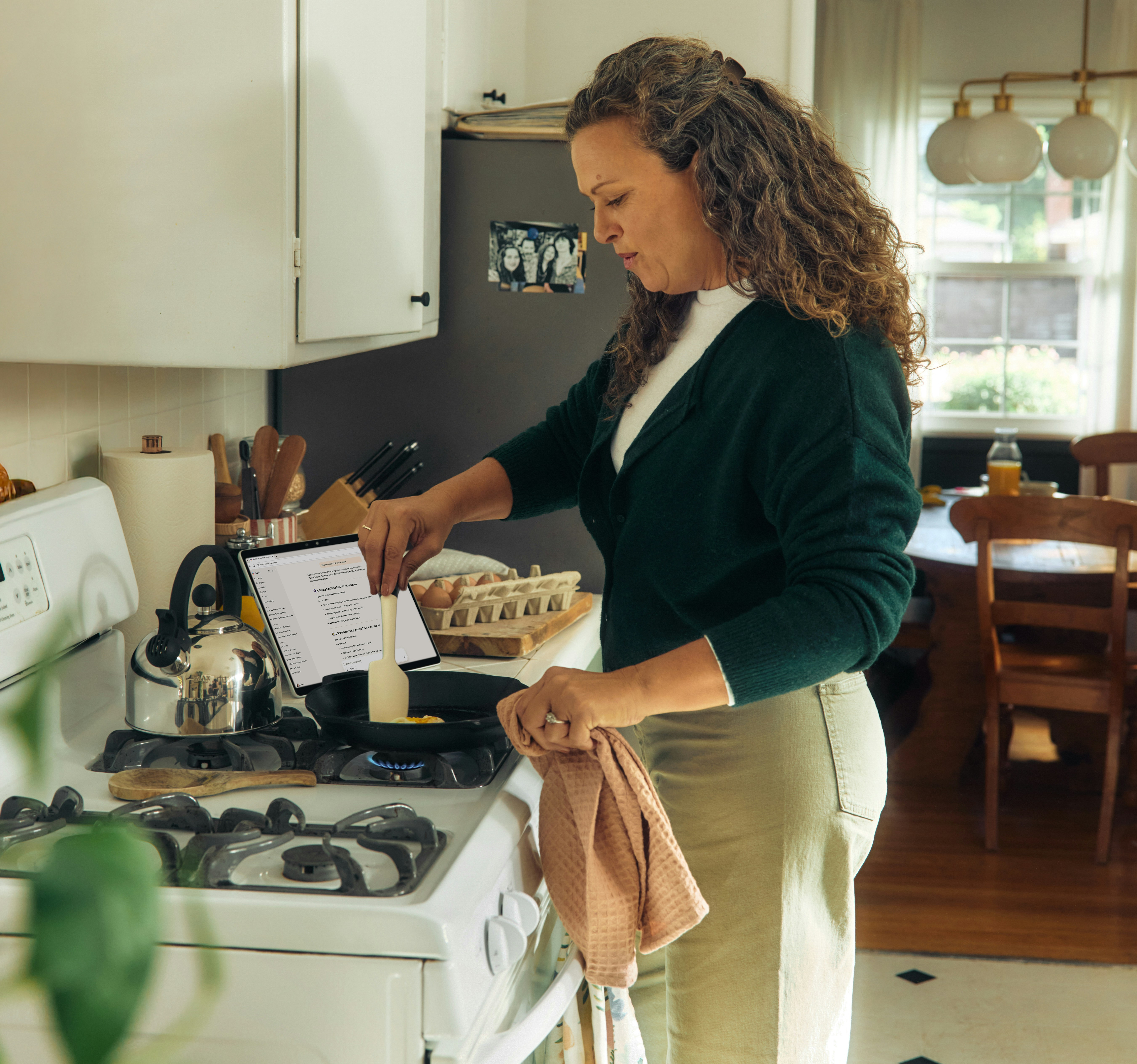
How to Read a Recipe Like a Chef: A Simple Walkthrough for Home Cooks
Learning how to read a recipe is a little like learning how to read a map. The ingredients tell you what to pack, but the directions tell you where you are going, when to turn, and what to watch for along the way. If you have ever started cooking and suddenly realized something needed to marinate, chill, rest, or cook for hours longer than you expected, you are absolutely not alone.
Recipes can look simple on the surface, but they often hide timing, tools, prep work, cooking words, and little judgment calls. That does not mean you are bad at cooking. It means recipe reading is its own skill. Once you know what to look for, the kitchen feels much calmer.
This guide is different from a list of kitchen hacks. Think of it as a practice run. We are going to walk through how to read a recipe before you cook it, then use a real linked recipe to show exactly what a beginner should notice.
How to Read a Recipe Before You Cook
Before you touch a knife, turn on the stove, or pull ingredients from the fridge, read the recipe all the way through once. Not perfectly. Not like you are studying for a test. Just read it from top to bottom so you know the basic story.
On the first pass, look for the big things: total time, oven temperature, special equipment, anything that needs to rest or chill, and any step that uses words like meanwhile, divided, softened, preheated, or until golden. Those words are small, but they carry a lot of responsibility.
Recipe reading habit: Circle or mentally note anything that has to happen before cooking starts. Most recipe stress comes from discovering those details too late.
The 5-Minute Recipe Scan
A simple recipe scan can save the whole meal. First, check the timing. Does the recipe include marinating, rising, resting, chilling, or bringing ingredients to room temperature? Second, check the tools. Do you need a thermometer, baking sheet, blender, Dutch oven, fine-mesh strainer, or stand mixer? Third, check the ingredient list for prep words.
There is a big difference between '1 onion' and '1 onion, diced.' If the ingredient list says diced, minced, grated, melted, drained, rinsed, divided, or softened, the recipe expects that work to be done before or during the steps. That is where many beginner cooks get surprised.
If you like seeing this process in person, The Learning Kitchen's hands-on cooking classes are built around learning by doing. A recent Cincy Magazine article also highlights the approachable class experience and individual cooking stations.
Recipe Reading Practice: Beef Stew
Practice recipe note: For this walkthrough, open the linked recipe in another tab and use this blog beside it. We are not reprinting the full recipe; we are practicing how to read it before cooking.
A good example is this Slow Cooker Beef Stew recipe from the USDA MyPlate Kitchen archive. It is useful for beginners because it has a clear recipe card, a long cook time, several prep words in the ingredient list, optional ingredients, and one small but important finishing detail. In other words, it gives us plenty to notice before the slow cooker ever turns on.
Before cooking it, look at the recipe card like a chef would. Notice the serving size, the ingredient prep, and the two cooking-time options: low for 8 to 10 hours or high for 4 to 6 hours. This is not a last-minute dinner. It is a plan-ahead comfort food recipe, which makes it perfect for practicing how to read before you cook.
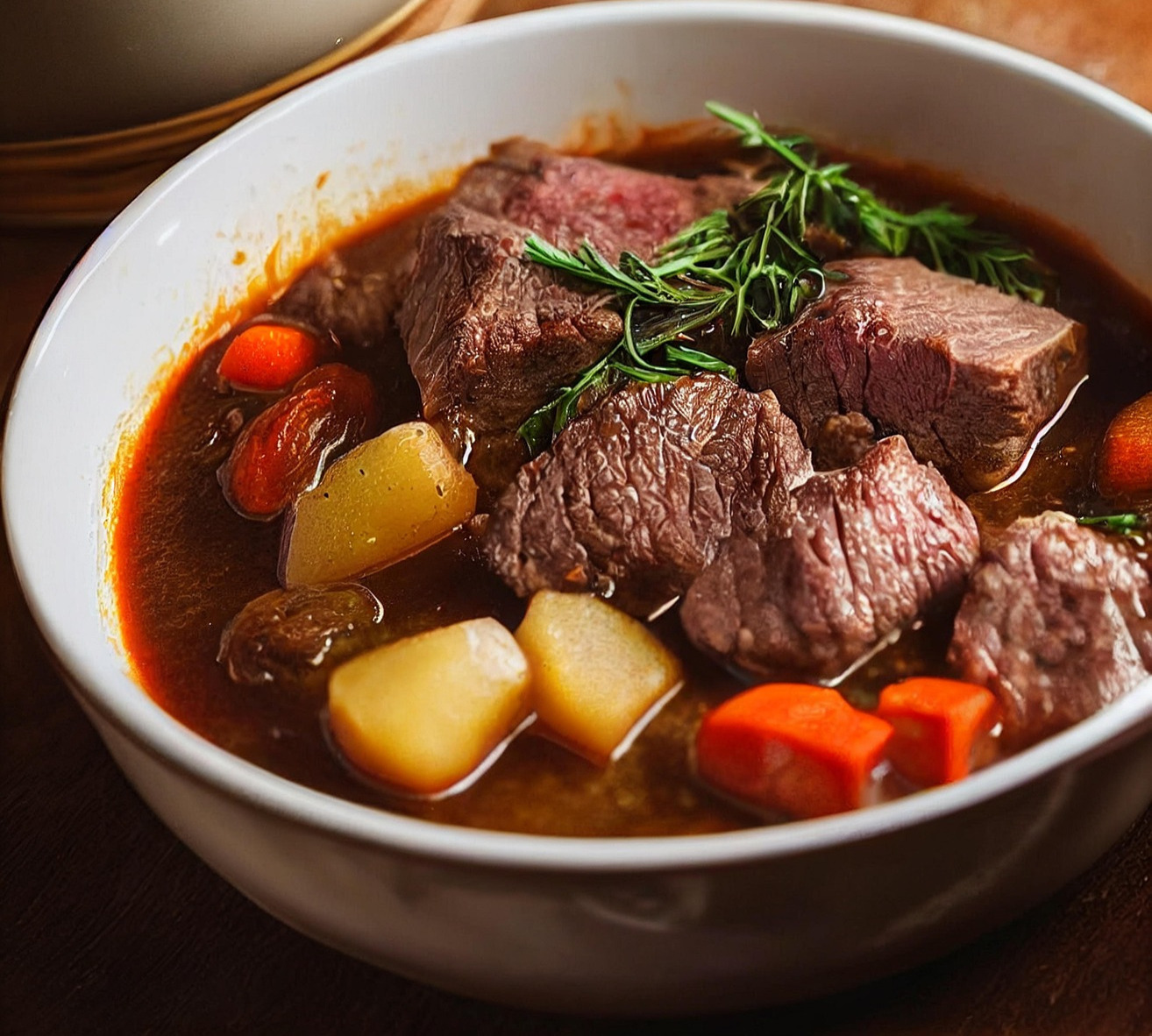
Source credit: Recipe by Montana State University Extension Service, published by the U.S. Department of Agriculture through MyPlate Kitchen and preserved by MyPlate.food.
Main ingredients to notice: stew meat cut into 1-inch cubes, flour, optional salt and pepper, water, beef bouillon, garlic, carrots, potatoes, onion, celery, and optional herbs like bay leaf, basil, or oregano.
Main directions to notice: wash hands, place meat in the slow cooker, coat meat with the flour mixture, add the remaining ingredients, cook low and slow or a little faster on high, stir before serving, and remove the bay leaf if you used one.
Now Read the Recipe Like a Chef
Before cooking the beef stew, a chef would notice several things right away. The meat is cut into 1-inch cubes, which helps it cook evenly. The flour is not random; it coats the meat and helps thicken the stew as it cooks. The salt, pepper, and herbs are optional, which means the recipe gives you room to season based on taste and what you have.
A beginner might look at the ingredient list and think, 'Okay, beef, potatoes, carrots, broth. Got it.' A more confident recipe reader looks deeper and thinks, 'I need to cube the meat, chop the vegetables, coat the beef with flour, choose my herbs, and start this early enough for the slow cooker to do its job.' That is a completely different level of readiness.
This is the real skill. You are not just following directions. You are understanding the rhythm of the recipe.
What Mise en Place Looks Like for This Recipe
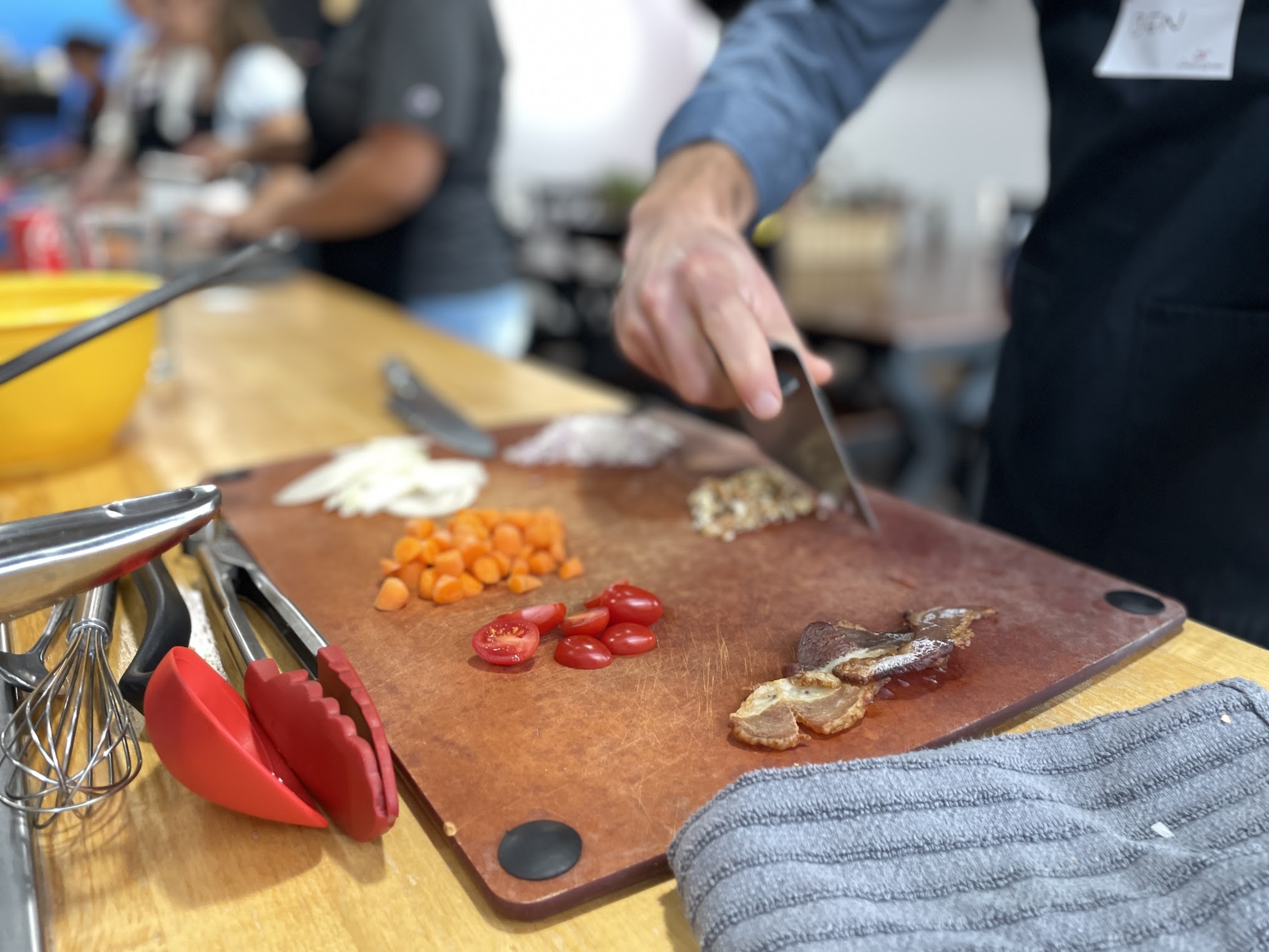
Mise en place means everything in its place, but it does not have to look fancy. For the beef stew, it could mean trimming and cubing the beef, slicing the carrots and celery, dicing the potatoes, chopping the onion, measuring the flour and bouillon, and setting out the slow cooker, bowl, spoon, and measuring tools before you start.
You do not need twenty tiny bowls to be organized. You just need the parts that move quickly to be ready before they matter. Even with a slow cooker recipe, prep still matters. If the vegetables are already cut and the meat is already coated, the recipe becomes easy to assemble instead of a countertop scramble.
Recipe Words That Tell You What to Do
Recipes use short words because they have to fit a lot of instruction into a small space. In the beef stew recipe, words like cubed, sliced, diced, optional, coat, low, high, and discard are doing real work. Cubed, sliced, and diced tell you how to prep the ingredients. Optional tells you where you can make a choice. Coat means the flour should lightly cover the meat, not sit in a dry pile.
The low and high settings are timing clues. Low gives the stew more time to slowly cook, while high shortens the timeline. Discard is easy to miss, but it matters if you used a bay leaf. Bay leaves add flavor while cooking, but they are not meant to be eaten whole.
Food Safety Clues Matter Too
The sample recipe includes beef, so safe cooking and handling still matter. A thermometer can help take the guesswork out of doneness, especially with meat and leftovers. FoodSafety.gov shares safe minimum internal temperatures for common foods, which is a helpful page to keep nearby.
Food safety does not have to make cooking feel scary. It simply gives you a few reliable rules, especially when handling raw meat, seafood, eggs, and leftovers.
How to Follow a Recipe Without Feeling Rushed
Once you start cooking, use the recipe like a checklist. Finish one action, then move to the next. If a step is long, look for the action words: wash, cut, coat, add, cook, stir, remove, serve. Those verbs are the backbone of the recipe.
Also give yourself permission to slow down. If you are new to cooking and a recipe says 35 minutes, plan for 50 the first time. That is not failure. That is learning. The second time will feel easier because your brain already knows the path.
What to Do When a Recipe Goes Off Track
Real kitchens are full of tiny changes. Maybe the potatoes need more time to soften. Maybe the stew needs a little more seasoning. Maybe the broth tastes a little flat. A recipe is a guide, but you are still allowed to respond to what is happening in front of you.
If food tastes flat, add a small pinch of salt or a squeeze of lemon. If something is browning too quickly, lower the heat or move it away from the hottest part of the pan. If something is too thick, add a splash of water, broth, milk, or pasta water depending on the dish.
That is one reason hands-on practice helps. You start to connect recipe words with real sights, smells, textures, and timing. Reading a recipe becomes less about memorizing rules and more about noticing what the food is telling you.
Quick Takeaways
·Read the full recipe once before cooking.
·Look for timing words like meanwhile, rest, chill, simmer, low, and high.
·Check ingredient prep words like diced, minced, divided, softened, and drained.
·Use mise en place to prep the ingredients and tools that matter first.
·Treat time as a guide and sensory clues as important signals.
·Use a thermometer when doneness matters.
·Make a recipe mostly as written the first time, then adjust with more confidence later.

Bring Recipe Confidence Into Real Life
Learning how to read a recipe is not about becoming perfect. It is about feeling less surprised while you cook. Every time you notice a timing clue, understand a prep word, or pause to organize your ingredients, you become a calmer and more confident cook.
If you want to practice those skills with real chef guidance, explore The Learning Kitchen's hands-on cooking classes or check the upcoming class calendar. Have questions before choosing a class? Visit the FAQ page or contact us at (513) 847-4474. You can also visit The Learning Kitchen at 7659 Cox Lane, West Chester, OH 45069.
