Hands-On Cooking Classes in Cincinnati | What to Expect
What to Expect at Hands-On Cooking Classes in Cincinnati
If you have been curious about hands-on cooking classes in Cincinnati but you are not sure what actually happens during class, you are not alone. A lot of first-time guests wonder the same thing. Do you need experience? Will you cook alone or with a group? What if you are nervous with a knife? What if everyone else already knows what they are doing?
The good news is that The Learning Kitchen is built for real people, not perfect home chefs. The whole point is to help you learn by doing in a relaxed, chef-led environment. You can walk in unsure and walk out with more confidence, new skills, and a meal you helped create.
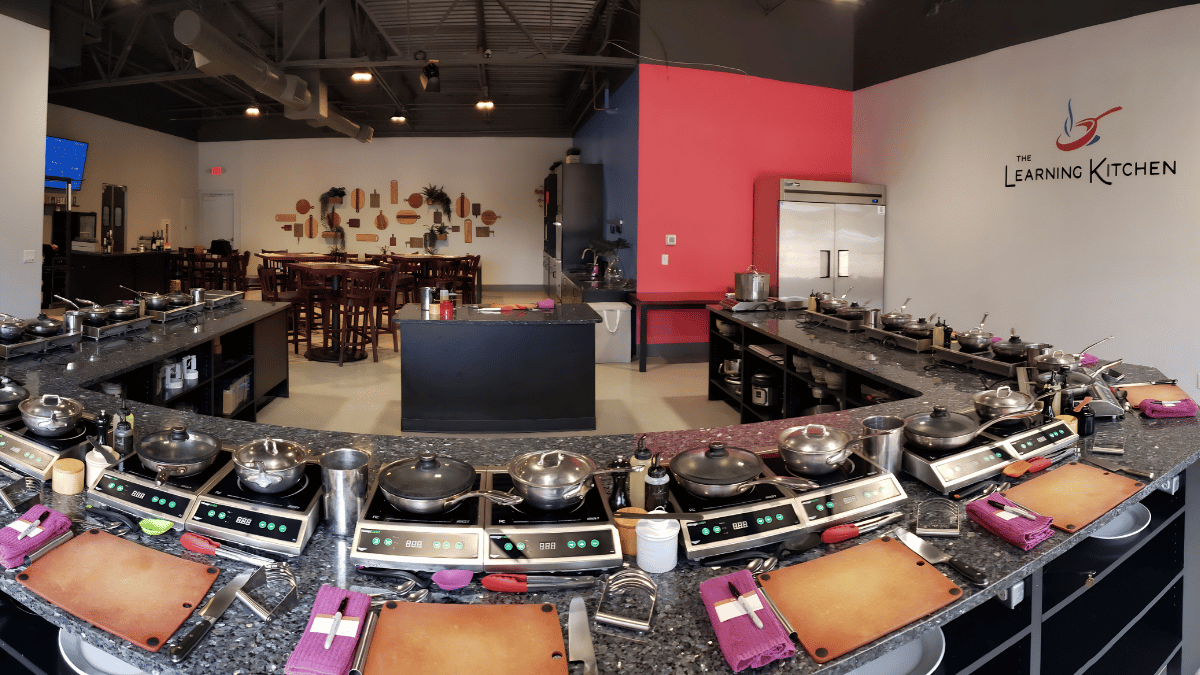
Hands-On Cooking Classes in Cincinnati Start with Your Own Station
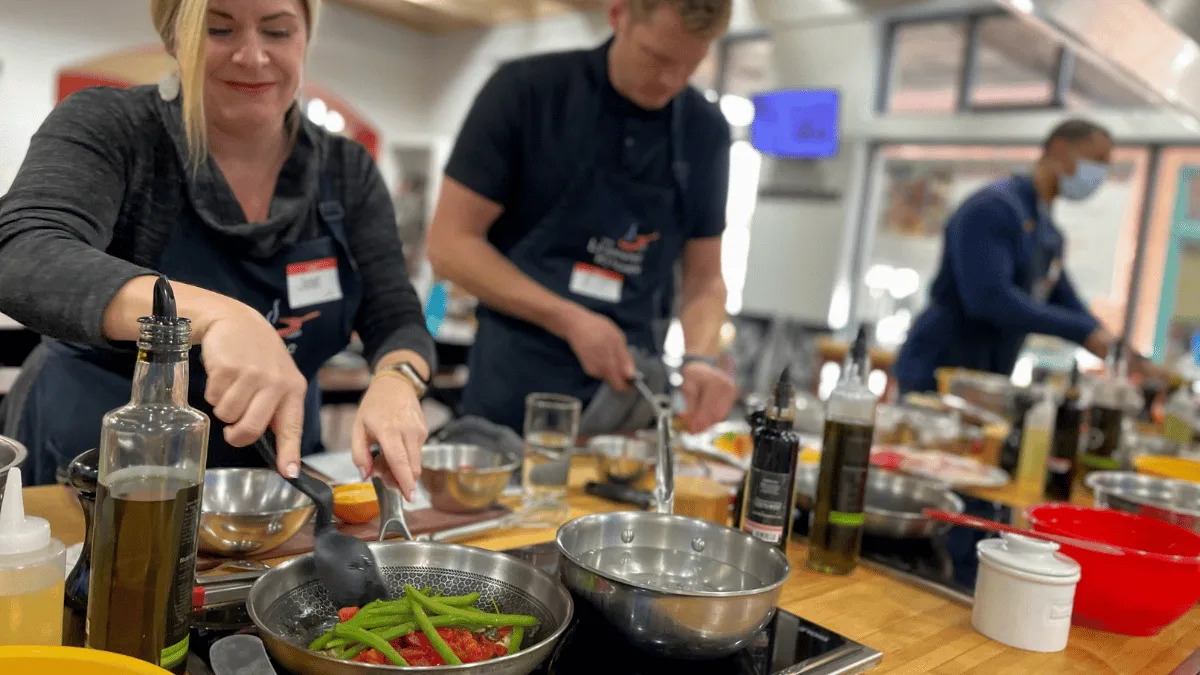
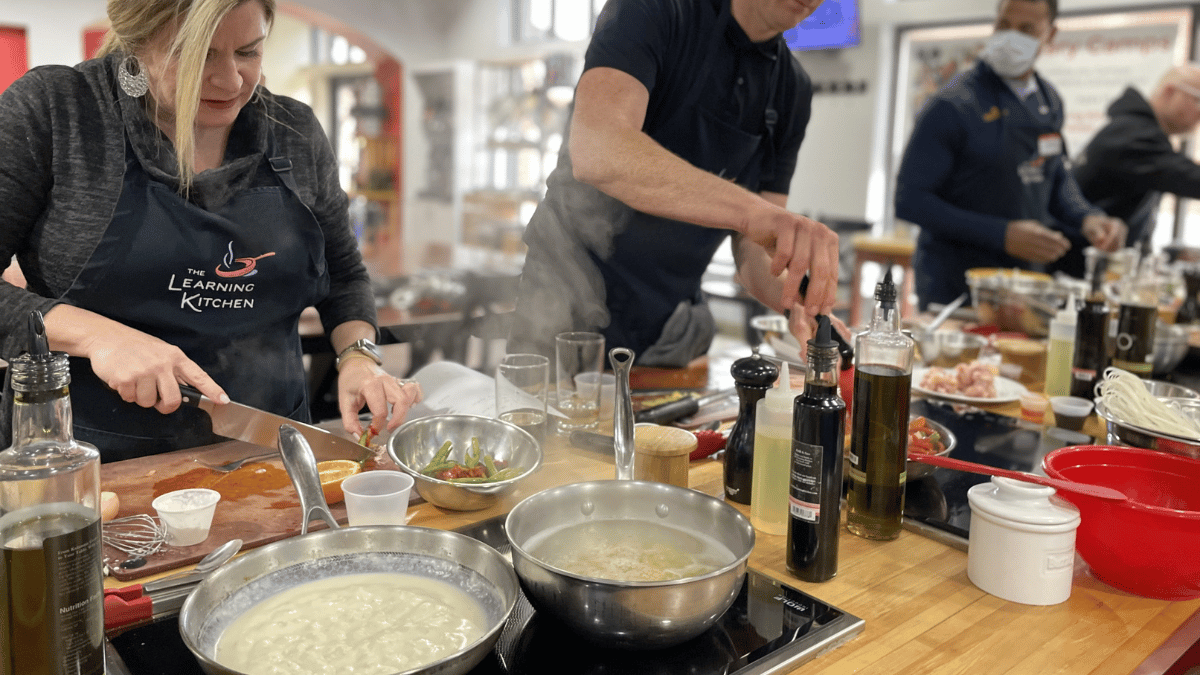
One of the biggest things that makes The Learning Kitchen different is the hands-on format. Guests cook at their own stations, which means you are not just watching someone else prepare the food. You are part of the process from prep to plating.
This matters because cooking is something you learn best by actually doing it. You can watch a dozen videos about chopping vegetables, making sauce, or searing protein, but it feels different when the knife, pan, and ingredients are in front of you. Having your own station gives you the chance to practice while still having professional support nearby.
It also makes the class feel more personal. You get to see how ingredients change as you cook them. You feel the timing of a recipe. You notice the smell of garlic hitting the pan, the texture of dough, or the moment a sauce starts to come together. Those little details are what make cooking click.
The Chef Guides You Step by Step
You do not need to memorize a recipe before you arrive. The chef instructor walks everyone through the menu and demonstrates the important steps. You will learn what to do, when to do it, and why the technique matters. That last part is especially helpful because it helps you understand cooking instead of simply following instructions.
For example, you might learn why a pan needs to be hot before searing, why pasta water can help a sauce cling, or why ingredients are prepped in a certain order. Those small lessons are what make the experience useful after class is over. You are not just making one dinner. You are collecting skills you can use again at home.
This is also where beginners get a lot of value. When something feels confusing, you can ask a question in the moment. The chef can explain the step, show the technique again, or help you understand what to look for. That immediate feedback is hard to get when you are cooking alone at home.
It Is Beginner-Friendly, Even If You Feel Nervous
Many people hesitate to book a class because they think they are not good enough at cooking. But a hands-on class is not a test. It is a learning experience. The Learning Kitchen's classes are designed for all skill levels, so beginners can feel comfortable and more experienced cooks can still pick up new techniques.
If you are nervous, that is completely normal. The environment is relaxed, and the chef is there to answer questions. You can ask about technique, timing, ingredients, substitutions, or anything else that helps you feel more at ease. Most guests quickly realize that everyone is there for the same reason: to cook, laugh, learn something new, and enjoy a great meal.
The Learning Kitchen's FAQ page explains that classes are designed to be fun, informative, and interactive for different skill levels. That is helpful for anyone searching for beginner cooking classes near me and wondering whether they will feel out of place.
What Happens When You Arrive
Before class begins, guests usually check in, get settled, and find their station. Comfortable clothes and closed-toe shoes are a smart choice because you will be standing and moving around the kitchen. It is also a good idea to arrive a little early so you have time to settle in instead of feeling rushed.
Once class starts, the chef introduces the menu and explains the flow for the evening. Depending on the class, you may prepare an appetizer, salad, entree, sides, sauce, pasta, dessert, or another menu component. The exact dishes change, but the rhythm is usually the same: listen, watch, cook, ask questions, taste, and enjoy.
This structure is what keeps the class from feeling overwhelming. You are not handed a recipe and left to figure it out alone. You have guidance, ingredients, equipment, and a clear next step.
For first-time guests, that simple flow is reassuring. You can focus on the step in front of you instead of trying to manage the whole meal at once. Before you know it, the pieces start coming together and the kitchen feels much less intimidating than it did at the beginning.
You Will Learn More Than One Recipe
A class may center around a specific menu, but the value goes beyond the dishes on the plate. As you cook, you naturally learn kitchen habits that make home cooking easier. You may practice reading a recipe, prepping ingredients before heat is involved, seasoning as you go, understanding timing, and keeping your station organized.
These are the kinds of skills that build confidence. Once you know what to look for, the kitchen feels less chaotic. You start to understand why chefs prep first, why they taste throughout the process, and why timing can make such a difference in the final meal.
That is why hands-on cooking classes work for so many different people. One guest may be there because they want to stop relying on takeout. Another may want a fun night out. Another may already cook often but want to learn a new cuisine or technique. Everyone can leave with something useful.
You Pick Up Food Safety Habits Along the Way
Cooking confidence is not only about flavor. It is also about feeling comfortable with safe habits. Trusted resources like FoodSafety.gov explain food safety basics such as cleaning, separating, cooking, and chilling. A class setting helps those ideas feel practical because you see them in action while preparing real food.
The FDA also shares guidance on safe food handling, including washing hands and surfaces, separating raw foods, cooking to the right temperature, and refrigerating foods promptly. You do not need to turn class into a lecture to benefit from these reminders. They become part of the normal rhythm of cooking.
You Get to Enjoy the Meal You Made
After the cooking comes the best part: enjoying what you made. That is one reason hands-on cooking classes are such a good fit for date nights, friends' nights out, family experiences, and anyone looking for something more interactive than a typical restaurant meal.
There is a special kind of satisfaction that comes from sitting down to food you helped prepare. Even if your plating is not perfect or your knife cuts are not chef-level yet, you get to taste the result of your own effort. That makes the meal feel more meaningful.
The meal also gives the experience a natural finish. You are not only learning skills in a classroom setting. You are enjoying a full culinary experience from start to finish, which makes it easier to remember what you learned later.
Why Hands-On Learning Sticks
Cooking can feel intimidating when it is treated like something you either know or do not know. In reality, it is a set of skills you build over time. Hands-on classes make that learning process easier because you get instruction, practice, feedback, and a finished meal all in one experience.
You also leave with a better sense of what you enjoy. Maybe you discover that pasta-making is your thing. Maybe you love baking, sauces, knife skills, or international cuisine. A single class can open the door to a new hobby or simply make weeknight cooking feel less stressful.
This is why a class can be valuable even if you never plan to become a serious home cook. You can still leave knowing how to move more calmly in the kitchen, how to ask better questions when reading recipes, and how to trust yourself a little more.
Quick Takeaways
·Hands-on cooking classes in Cincinnati are designed for learning by doing, not just watching.
·Guests cook at their own stations with chef-led instruction and support.
·The Learning Kitchen is beginner-friendly and works for different comfort levels.
·Classes help guests build practical cooking confidence they can use at home.
Ready to Try a Class?
If you are ready to get more comfortable in the kitchen, explore The Learning Kitchen's hands-on cooking classes or view the upcoming class calendar. For questions before booking, visit the Contact page or call (513) 847-4474.
The Learning Kitchen is located at 7659 Cox Lane, West Chester, OH 45069.
